

In Canadian mining, access is everything. If your haul road hits a creek, a washout, a seasonal channel, or a sudden erosion problem, you don’t just lose a crossing, you lose production time, safety margin, and schedule certainty. That’s why temporary bridge solutions are a core part of modern bridge construction planning for Canadian mining projects, especially when heavy loads and remote logistics are involved.
Here is a practical, mining-first guide to choosing and planning a crossing that can handle heavy equipment, construction equipment, and the kind of heavy machine traffic often found on mine sites.
Key takeaways:
- In Canadian mining, temporary access bridges reduce downtime when weather, water, or terrain interrupts haul roads.
- The “right” solution depends on speed, span, loads, site constraints, and permitting requirements.
- Designing for heavy equipment isn’t just about the bridge deck. Approaches, abutments, and erosion protection matter.
- Great Northern Bridgeworks helps mining teams move from “we need a crossing” to “we’re operating” with end-to-end bridge construction support.
- In British Columbia, Changes In And About a Stream as well as fish habitat protection can drive timelines, so plan early.
Why Bridges Matter for Mine Access in Canadian Mining
In Canadian mining, both permanent and temporary access is often the difference between keeping equipment moving and watching a critical path slide week by week.
Here’s where our bridge solutions shine:
Speed when timing is non-negotiable
Exploration seasons, construction windows, and winter road schedules don’t wait. A well-planned temporary crossing can be installed fast enough to protect timelines without forcing you into a rushed decision.
Safety when heavy machines show up
Mine traffic isn’t light-duty. Temporary crossings must accommodate heavy equipment and oversized loads safely, with predictable performance under repeated cycles.
Flexibility as your mine evolves
In Canadian mining, routes change. New pits open, stockpiles move, contractors mobilize, and access requirements can shift. Portable bridges and modular systems give mining teams options without locking them into a permanent alignment too early.
Environmental control and compliance
Many mine crossings involve water. Canada has specific best-practice guidance for bridge work near water, including clear-span bridge practices designed to reduce impacts to fish and habitat. This matters because responsible planning reduces risk, delays, and rework, which is especially important in Canadian mining where projects often operate in sensitive environments.
Common mine-site crossing scenarios
- Haul road access across streams, ditches, or seasonal channels
- Temporary detours around washouts or slide zones
- Construction-phase access to remote pads and staging areas
- Early works for camp access, drilling programs, and utilities
Temporary Bridge Builds: Choosing the Right Bridge for Your Site
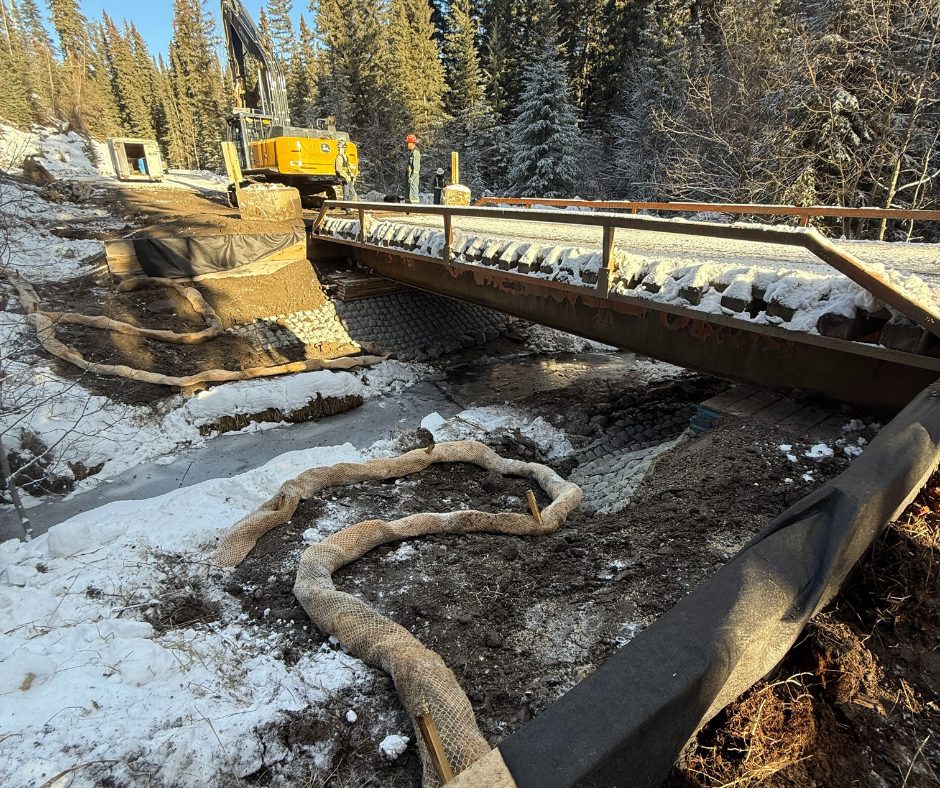
Not all “quick crossings” are created equal. In Canadian mining, the best solution comes down to two things: what you need the bridge to carry (heavy equipment, an earth mover, or everyday site traffic) and how your access needs will change over the life of the project. That’s where Great Northern Bridgeworks steps in with comprehensive bridge solutions, evaluating your site conditions, usage needs, and timeline to recommend the right bridge type and a clear execution plan.
Your main options for mine access:
Portable / modular temporary bridges (fastest to deploy)
If you need access now for a resource road, construction staging, or a short-term program, a temporary bridge with portable bridges or modular components is often the most efficient path. These are designed for rapid assembly and removal, helping Canadian mining teams maintain connectivity during construction, emergency disruptions, or seasonal access windows.
Best for: short-term site access, emergency crossings, construction site access, utilities corridors (pipelines/powerlines), project-based mine programs.
Mobile bridge solutions (built for changing haul routes)
For mine sites where alignments shift and access evolves, a mobile bridge approach can support staged construction and reroutes without forcing you into a permanent solution. This is especially useful in Canadian mining when a route that works during early project stages needs to change once pits, stockpiles, or processing areas expand.
Best for: phased mine development, detours, evolving traffic patterns, staged road building.
Low profile bridges (when space, clearance, or impact is tight)
Some crossings aren’t limited by load, they’re limited by space. Low profile bridges are ideal for height restrictions, limited approach room, or sensitive areas where minimal disturbance matters. In Canadian mining, these bridges are commonly used for mining access, linear disturbances, and remote industrial sites where you need a compact solution that still performs under real site conditions.
Best for: low-clearance crossings, linear disturbances, environmentally constrained sites, remote mining and forestry operations.
Site-specific temporary or permanent bridge builds (when constraints are complex)
If the crossing needs to stay in place longer, spans are more demanding, or the approaches require stabilization, a more tailored build may make the most sense. Great Northern Bridgeworks supports both temporary bridge installations and full bridge construction for permanent structures, designed to meet regulatory and specified standards while limiting unnecessary environmental impact.
Best for: longer-duration projects, complex approaches, high-consequence crossings, industrial and municipal infrastructure, long-term mine access.
What determines the right mine-site bridge solution:
When mining teams choose a crossing, these are the factors that matter most:
Load reality, not brochure loads
Peak weights, axle groupings, and how often your heavy equipment crosses per day.
Span + hydraulics + seasonal behaviour
High-water events, debris, ice, and scour risk can make or break a crossing in Canadian mining.
Approach geometry and stability
Grades, turning radius, compaction, drainage, and settlement resistance under constant heavy traffic.
Site constraints and footprint
Height restrictions, limited staging room, and whether a low profile bridge reduces earthworks and disturbance.
Timeline and logistics
Permitting lead times, site access for cranes/rigging, delivery constraints, and install sequencing.
Lifecycle plan
Are you removing the bridge, relocating it, upgrading it, or converting it to a permanent bridge?
Bottom line: For Canadian mining, the best choice is usually the one that reduces schedule risk and safety exposure, not just the one with the lowest upfront cost. Great Northern Bridgeworks helps you match the bridge type to your actual site conditions and project needs, so site access is reliable from day one through the final haul.
Heavy Equipment Crossings: Designing for Earth Movers, Construction Equipment, and Oversized Loads
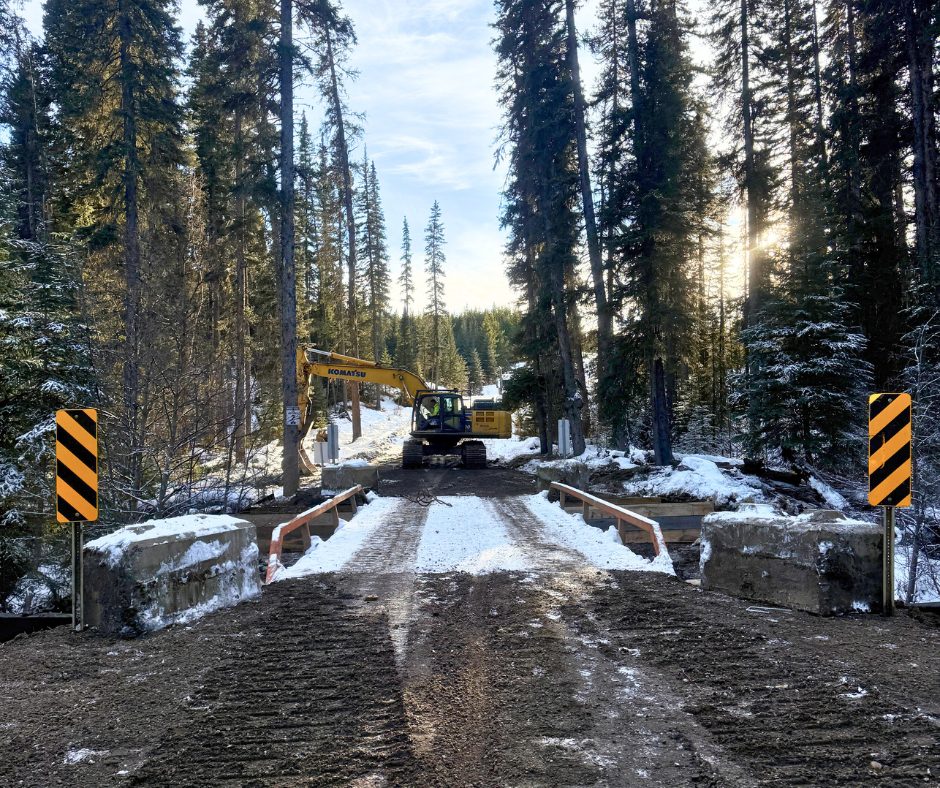
If you’re building for mine traffic, you’re designing for the harsh environment of heavy machine work: big weights, real-world impacts, and constant repetition. In Canadian mining, the bridge isn’t just spanning water, it’s supporting productivity.
What “designed for heavy equipment” should include:
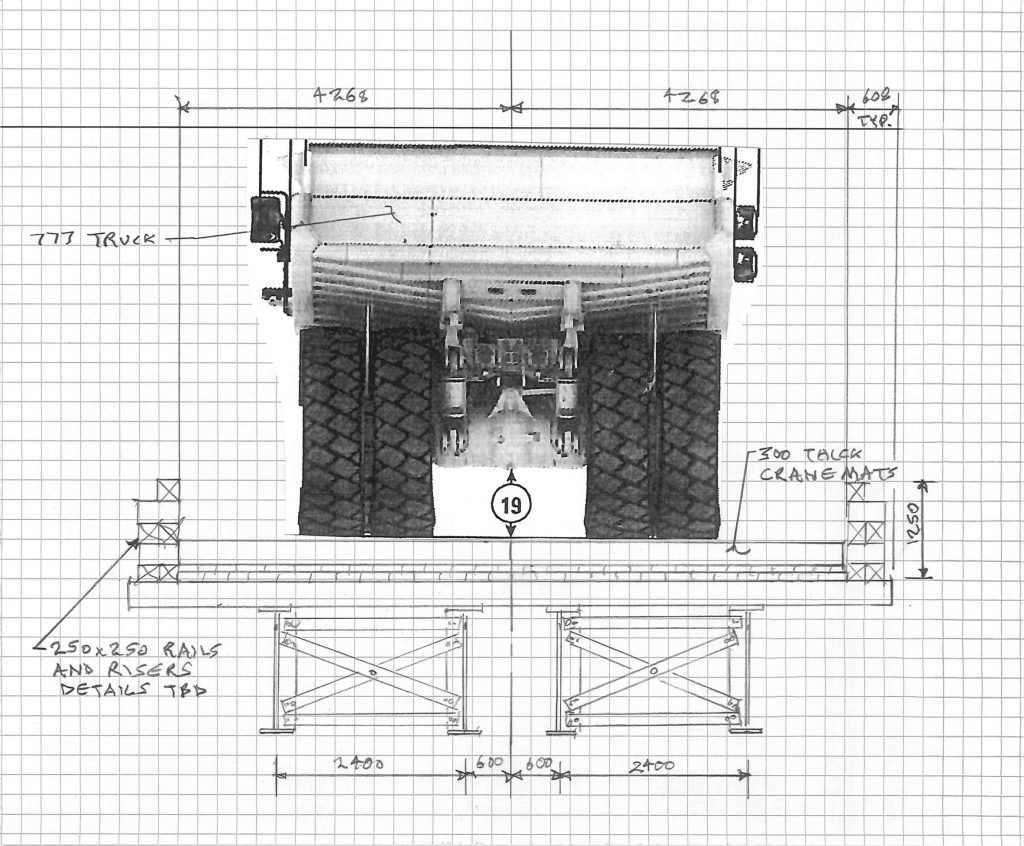
Realistic load assumptions
It’s not enough to say “heavy equipment rated.” Mine loads can include specialized haul configurations, cranes, drill rigs, and oversized transport. Design should reflect the heaviest credible use case and include safety factors appropriate for bridge design in Canada.
Canada’s highway bridge design framework (CSA S6 / CHBDC) is widely used to set consistent safety and reliability expectations for bridge design and evaluation. CSA Group For work in British Columbia, provincial supplements may also apply for certain projects.
Deck performance under abuse
Mine decks face tracked equipment (where allowed), tire chains, debris, and freeze-thaw. Deck selection and surfacing must handle traction needs without becoming a maintenance headache.
Approaches and abutments that don’t become the weak link
A surprising number of “bridge failures” are really approach failures: settlement, erosion, poor drainage, or inadequate compaction. In Canadian mining, where soils vary wildly, approach design is as important as the span.
Hydraulics, scour, and debris management
Temporary crossings still need to respect flow paths and erosion realities. A clear-span approach can reduce instream disturbance and simplify fish habitat considerations.
Operational controls
Signage, speed limits, one-way protocols, and inspection schedules are simple controls that protect the crossing and the people using it.
Bridge Rentals for Mine Sites
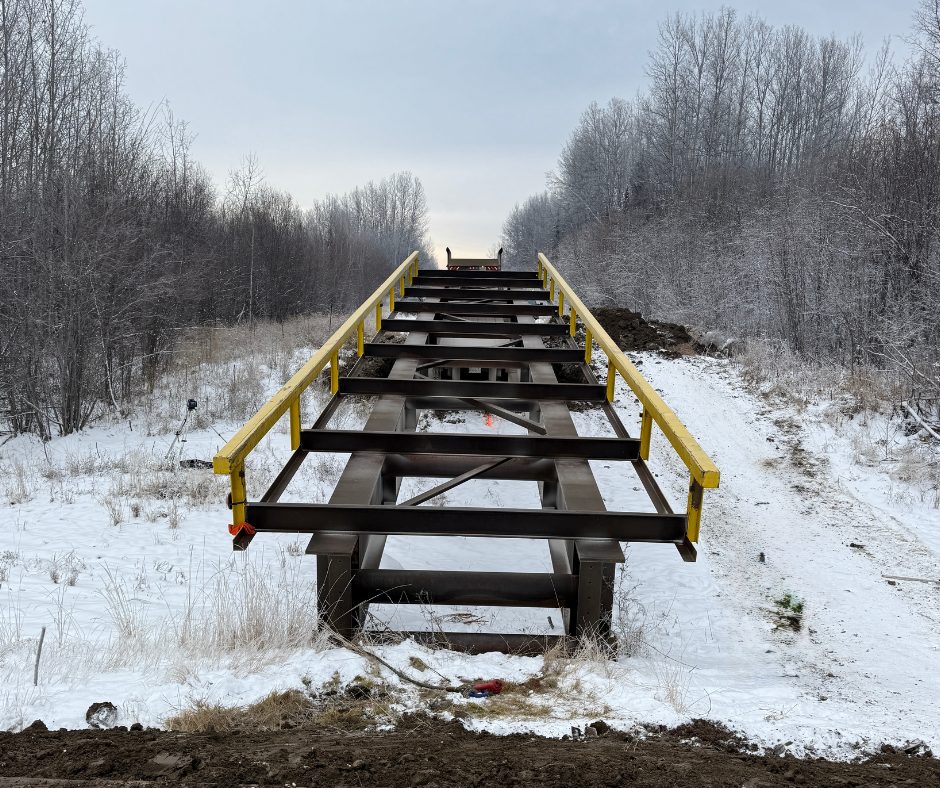
When you need temporary bridge access on an active mine site, bridge rentals can be the fastest path to keeping haul routes open, maintaining safe crossings for heavy equipment, and protecting your schedule without committing to a permanent build. Great Northern Bridgeworks’ portable bridge rental fleet is designed for industrial access in remote and rugged conditions, with options that scale based on span, width, and real-world load requirements.
Portable bridge rental specs (typical ranges)
- Length range: 30–160 ft
- Width range: 14–18 ft, including two-lane options
- Load capacities: L100 – L500
Rental bridge options available
All-Steel Low-Profile Bridges
Engineered for rapid deployment and transport, these bridges are a strong fit when vertical alignment is tight and you need durable access with minimal disturbance.
Standard Steel Portable Bridges
A versatile, robust rental option for temporary road access and site connectivity where speed and reliability matter.
Standard Steel Portable Modular Bridges
Built for flexibility, these modular systems can be configured for different spans and load demands, including heavier equipment and evolving site needs.
Resource Access Bridges
Designed to withstand harsh environments and steady traffic, supporting uninterrupted operations in challenging terrain.
Why rentals work well in Canadian mining
- Speed: quicker mobilization and installation than many site-built options
- Flexibility: scale span, width, and capacity as mine plans evolve
- Cost control: predictable rental structure vs. one-off builds
- Reduced downtime risk: reliable access even through weather and seasonal constraints
- Support: experienced guidance and boots-on-the-ground installation in tough conditions
What Mining Companies in Should Plan for: Site Conditions, Permitting, Installation, and Safety
For mining companies in British Columbia, “we need a bridge” quickly becomes “we need a bridge and we need to do this the right way.” Planning early can prevent the kind of delays that hurt mining schedules the most.
Site conditions that drive design
- Soil type and bearing capacity (and how it changes with moisture)
- Slope stability and erosion risk
- Channel width, flood behaviour, and debris loads
- Ice, freeze-thaw, and seasonal access constraints
- Space for cranes, rigging, and approach construction
Permitting and regulatory considerations
If your work involves streams or waterbodies, permitting can be a schedule driver.
- In British Columbia, changes in and around streams and bodies of water may require approval or notification under the Water Sustainability Act framework.
- Federally, best practices for bridges near water are outlined by Fisheries and Oceans Canada, with a focus on avoiding harmful impacts to fish and fish habitat.
- If the waterbody is navigable (or the work interferes with navigation), additional federal requirements may apply under Canada’s navigation protection framework.
Installation planning that prevents downtime
A good temporary crossing plan includes:
- Survey + layout confirmation
- Approach prep + drainage strategy
- Foundation/abutment preparation
- Delivery and staging
- Erection/placement sequence
- Safety controls + commissioning checks
- Inspection and maintenance schedule
Safety and compliance on active work sites
Bridge installation is construction work, and in British Columbia that means aligning with applicable occupational health and safety requirements. WorkSafeBC’s construction regulation framework includes requirements relevant to temporary works and worker protection. In Canadian mining, safety planning is what turns a “fast install” into a safe, repeatable crossing that crews trust.
Closing: Keep Canadian mining moving, safely
In Canadian mining, bridges are critical infrastructure for productivity. The right temporary bridge solution delivers safe, reliable access for heavy equipment, protects your schedule, and reduces risk when water, terrain, and weather try to derail the plan. If you need a crossing that can handle real mine loads, Great Northern Bridgeworks is ready to assess your site, recommend the right portable bridge or mobile bridge system, and deliver bridge construction built for remote conditions. Request a quote or talk to our team today.