
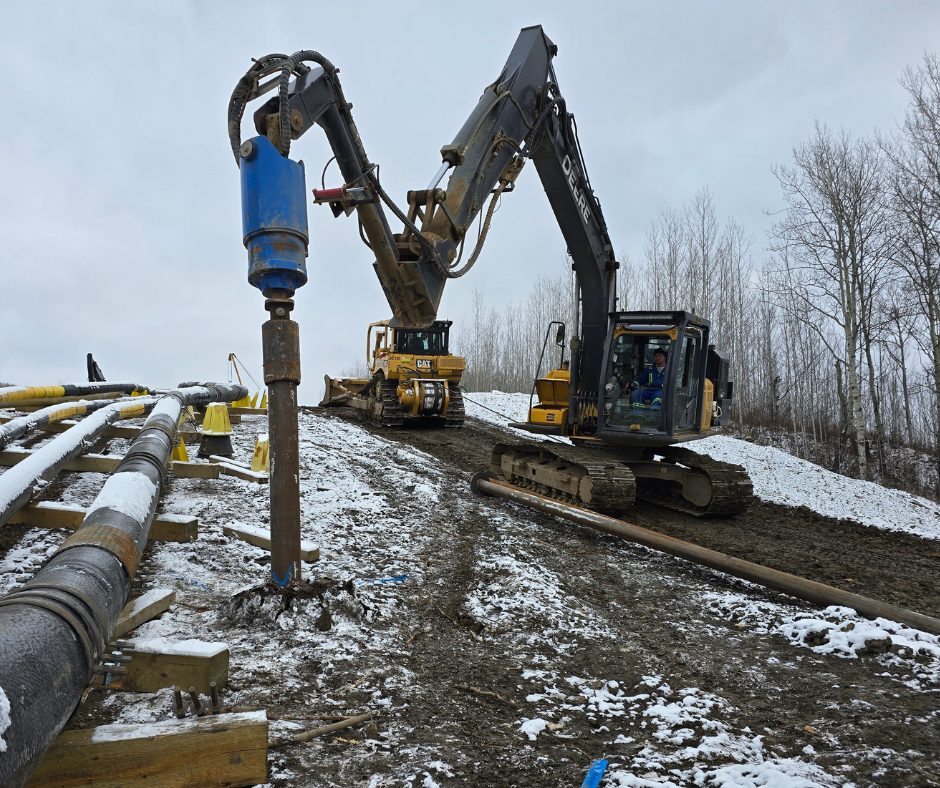
Choosing a piling contractor is not just another line item in your project budget. It can decide whether your structure stays stable for decades, or starts fighting settlement, shifting, and expensive repairs far sooner than it should. In British Columbia, where ground conditions can change dramatically from one kilometre to the next, the difference between a smooth build and a painful one often comes down to how well the piling scope is planned, executed, and documented. This guide breaks down what to look for when hiring a pile driving company, especially for heavy civil, bridge, industrial, and remote-access projects. We’ll cover site experience, methods, equipment, helical systems, documentation, and safety, all through the lens of real-world job conditions. If you’re comparing contractors and want a clear way to assess capability, this is the shortlist you’ll actually use.
A Practical Shortlist to Choose the Right Piling Contractor
If you want a simple way to evaluate contractors quickly, use this checklist. The right partner for pile driving should be able to clearly provide:
- Proven experience with pile driving in conditions similar to your site
- The right pile driver and method for your structure, not just a default approach
- Clear guidance on helical piles and screw piles, including where they are not ideal
- Documentation and verification that supports engineered pile construction
- A safety program and track record you can actually verify
Proven Pile Driving Experience in British Columbia Conditions
British Columbia is not a one-size-fits-all environment. Coastal sites can involve soft marine clays, high groundwater, and environmental constraints. Interior sites might bring dense glacial till, cobbles, boulders, frost considerations, and short construction windows. Remote projects layer in logistics like limited staging areas, access roads, equipment transport, weather delays, and fewer opportunities to “fix it later.” When evaluating a contractor, look for evidence that they have done pile driving in conditions like yours, not just generic experience. The best crews can explain what changes when you move from coastal to interior ground, or from highway access to helicopter or barge-dependent logistics.
What to ask a potential contractor
- What regions do you work in most often, and what ground conditions do you see there?
- What projects have you completed that are similar in soil type, access, and load requirements?
- How do you handle unexpected soil variation during pile driving?
- What does your mobilization plan look like for tight or remote sites?
A contractor with strong experience will be comfortable evaluating groundwater, dewatering, access limitations, and how they might adjust methods when site realities do not match the textbook.
Equipment and Methods That Match the Right Pile Driver to the Job
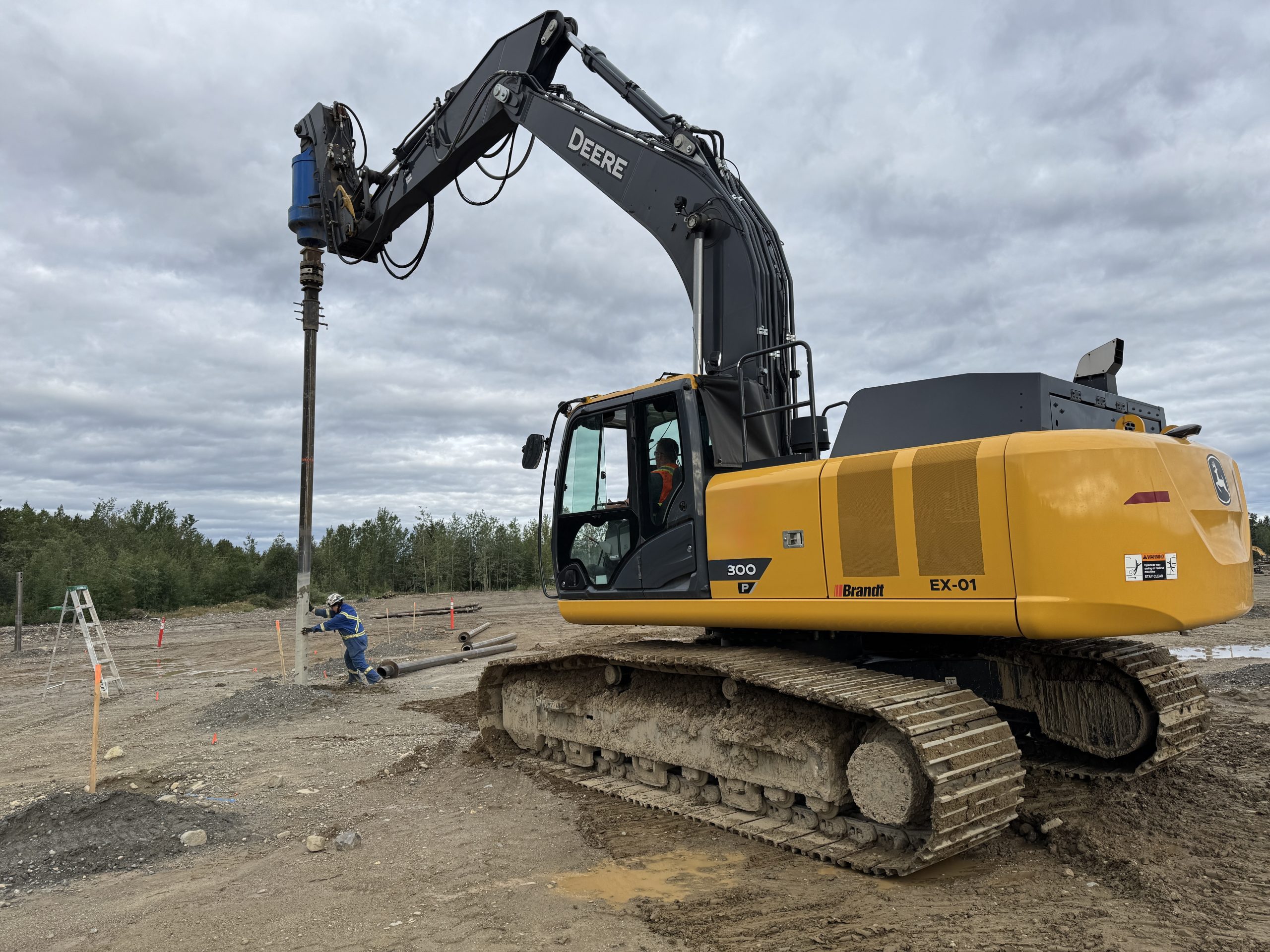
The right approach to piling starts with your project requirements, not the contractor’s default equipment. A credible pile driving company will ask about loads, settlement tolerances, access, schedule constraints, vibration sensitivity, and whether the structure is temporary or permanent. Then they’ll recommend a method that fits those realities. Pile driving might involve driven piles, screw piles, sheet piles depending on the application. In some cases, you may need specialized attachments, tighter tolerances, or specific sequencing so the work integrates smoothly with excavation, shoring, or superstructure installation.
Good indicators that your contractor is method-driven rather than equipment-driven
- GNB can explain which pile driving method accommodates your soil profile and structure
- GNB has contingency planning for refusal, obstructions, or different soil conditions
- GNB equipment and maintenance practices are clearly documented
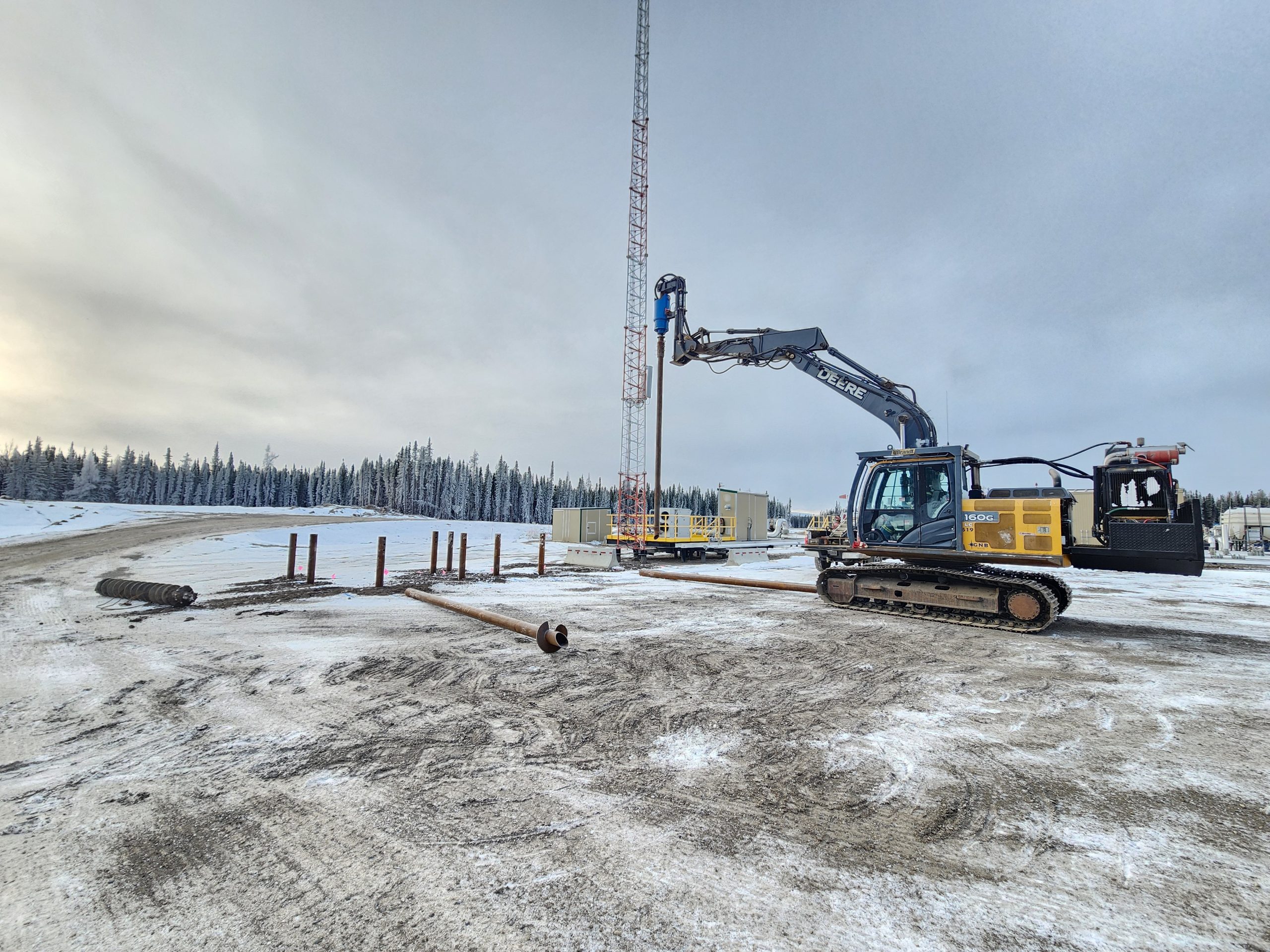
Helical Screw Piles are rotated into the ground to achieve the required specifications for appropriate soil conditions. A helical screw pile driver can be a strong fit when you want speed and mobility. Helical screw piles are often attractive for projects where access is limited, where vibration is a concern
Situations where helical piles or screw piles can be a great option
- Tight schedules where rapid installation supports the critical path
- Areas near existing structures where vibration and noise matter
- Remote sites where lighter equipment improves logistics
- Ground conditions that support predictable torque-to-capacity correlation
A good piling contractor will recommend the right piles for specific ground conditions
Engineering, Load Testing, and Documentation is Part of GNB’s Services
Pile construction is not just about getting piles in the ground. It is also about proving performance and capturing data that engineers, inspectors, and owners can rely on. This is where strong contractors separate themselves from crews that simply “get it done.” A solid process typically includes pre-install coordination, clear installation records, and reporting that supports engineering review. Depending on the system, records might include depth, refusal criteria, torque logs, installation rates, or other verification metrics. In some projects, load testing or proof testing is required, and the contractor should be comfortable planning and executing that scope.
What good documentation looks like:
- Installation records that are complete and easy to interpret
- As-built information that ties back to design requirements
- Clear notes on any deviations, obstructions, or field decisions
If a contractor cannot tell you what documentation you will receive at the end of pile driving, that is a risk. Strong reporting reduces disputes, supports inspection and permitting, and protects the long-term reliability of the project.
Safety, Permitting, and Track Record That a Reputable Pile Driving Company Should Show
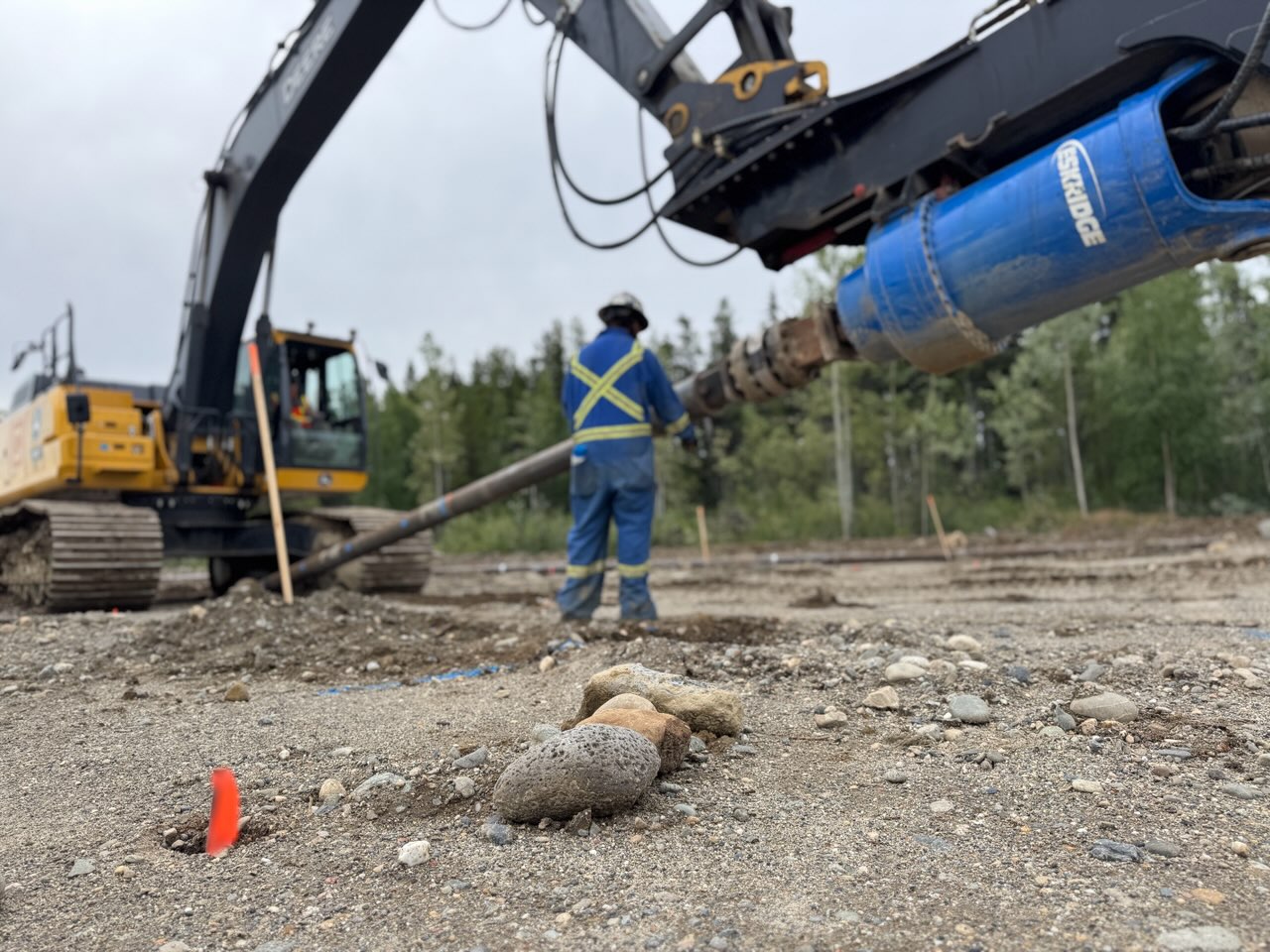
Pile driving involves heavy equipment, suspended loads, high-energy operations, and site hazards that require a serious safety culture. A reputable contractor should have a clear safety program, site-specific hazard planning, equipment inspection routines, and trained operators who understand both the equipment and the environment they’re working in.
In British Columbia, permitting and environmental requirements can also shape piling plans. Work near waterways may involve timing windows, sediment control, noise restrictions, and additional documentation. Contractors who regularly operate in these contexts will plan around constraints early, rather than scrambling after mobilization.
Quick credibility checks when comparing contractors:
- Ask for project references with similar access and soil conditions
- Ask what safety documentation they provide before mobilization
- Ask how they handle refusal, obstructions, or piles that do not meet design depth
- Ask what their process is if soil conditions differ from the geotechnical report
- Ask what permitting or environmental considerations they routinely manage
A strong track record is not just about big projects, it’s about consistent performance, predictable schedules, and avoiding preventable issues.
Final Thoughts
Piling is foundational work in every sense of the word. The right contractor treats pile driving as a coordinated, engineered scope, not simply an equipment task. Whether your project needs traditional pile driving, helical screw piles, or screw piles, the best outcomes come from the same place: experience in conditions similar to your site, the right method for the soil, and documentation that proves performance. If you’re planning a project and want a team that understands heavy civil realities, contact Great Northern Bridgeworks to define project scope, plan pile construction, and execute pile installation with the professionalism your site requires.